High Quality & Great Pricing l # Plates from $29 l Dirt Bike Kits $175 l Stickers 12 @ $9
Choosing the right helmet is one of the most important decisions a dirt bike rider can make. Off-road riding involves different terrain, speeds, impacts, and riding positions compared with many other types of motorcycling. Knowing how to recognize a genuine dirt bike helmet can help riders choose equipment that matches their riding style.
For riders who also want to personalize their motorcycle, Boondocks Decals offers custom dirt bike graphics and vinyl decal kits. This guide, How to Identify a Dirt Bike Helmet: 5 Simple Steps, explains what to look for when choosing an off-road helmet.
Before learning How to Identify a Dirt Bike Helmet: 5 Simple Steps, it’s important to understand why helmet design matters.
Dirt bike helmets are developed specifically for off-road environments. They commonly feature extended chin protection, ventilation, a visor, and an opening designed to accommodate motocross goggles.
A helmet that looks like a motocross helmet isn’t necessarily appropriate for every type of riding. Riders should check the manufacturer’s specifications, intended use, fit, and applicable safety certification before purchasing.
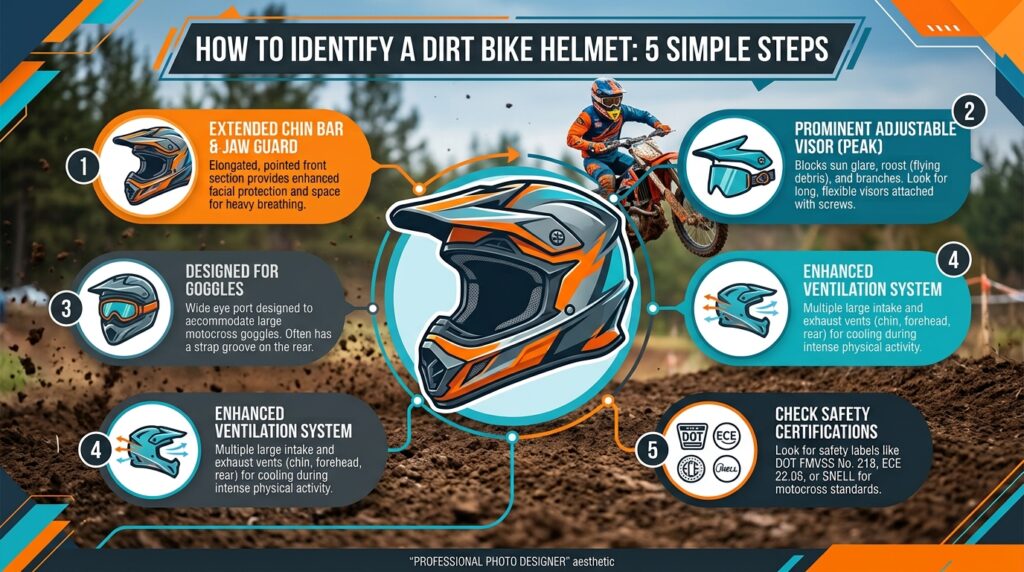
The first step in How to Identify a Dirt Bike Helmet: 5 Simple Steps is looking at the overall shape.
A dedicated dirt bike or motocross helmet typically has a pronounced chin bar, an open eye-port, a sun visor or peak, and substantial ventilation.
The large eye-port is particularly useful because it allows riders to wear motocross goggles. The extended chin area provides space around the mouth and helps create the characteristic appearance of an off-road helmet.
Unlike many street motorcycle helmets, dirt bike helmets generally do not have an integrated face shield.
The second step in How to Identify a Dirt Bike Helmet: 5 Simple Steps is checking the helmet’s safety certification.
Look for certification information from the relevant safety standard for the country or region where you ride. The exact requirements can vary, so always verify the current regulations and the manufacturer’s certification information.
A legitimate helmet should have clear labeling or documentation identifying its applicable certification. Be cautious with helmets that have unclear markings, missing labels, or suspiciously incomplete product information.
Certification should be considered alongside proper fit, helmet condition, manufacturer reputation, and intended riding use.
Fit is a crucial part of How to Identify a Dirt Bike Helmet: 5 Simple Steps.
Even a high-quality helmet cannot provide its intended performance if it doesn’t fit correctly. The helmet should feel secure around your head without causing painful pressure points.
When trying one on, check that:
Helmet shapes can vary between brands, so don’t assume that the same size will fit identically across different manufacturers.
Another important part of How to Identify a Dirt Bike Helmet: 5 Simple Steps is checking airflow and goggle compatibility.
Off-road riding can be physically demanding, especially during motocross racing or long trail sessions. Ventilation helps move air through the helmet and can improve rider comfort.
The eye-port should also provide enough space for appropriate motocross goggles. Try the helmet with the goggles you plan to use and make sure they sit comfortably without creating excessive pressure or gaps.
A visor or peak can also help reduce glare and provide additional protection from roost and debris.
The final step in How to Identify a Dirt Bike Helmet: 5 Simple Steps is inspecting its condition.
If you’re buying a used helmet, be especially careful. You may not be able to determine whether it has experienced an impact simply by looking at the exterior.
Check the shell for cracks, damage, significant wear, or modifications. Inspect the interior padding and retention system as well.
Also check the manufacturer’s information regarding the helmet’s service life and replacement recommendations. If the history of a used helmet is unknown, replacing it with a new helmet may be the more appropriate choice.
Understanding How to Identify a Dirt Bike Helmet: 5 Simple Steps becomes easier when you know the basic differences between off-road and street-oriented helmets.
Dirt bike helmets prioritize ventilation, goggle compatibility, lightweight construction, and a design suited to standing and moving around on the motorcycle.
Street helmets generally prioritize features such as aerodynamic design, integrated face shields, and reduced wind noise.
Neither design is automatically suitable for every situation. Select equipment based on the type of riding you actually do and the manufacturer’s intended use.
Your motorcycle brand doesn’t determine which helmet you need, but your riding environment does.
Whether you’re riding a KTM, Yamaha, Honda CRF, Kawasaki KX, or Suzuki RMZ, a suitable off-road helmet should complement the rest of your riding equipment.
For motocross racing, riders often combine an off-road helmet with goggles, gloves, boots, riding pants, jerseys, and protective equipment.
A coordinated bike can also complete the overall appearance. Custom dirt bike graphics and vinyl decal kits can give your motorcycle a personalized look that matches your helmet and riding gear.
Another useful lesson from How to Identify a Dirt Bike Helmet: 5 Simple Steps is that comfort shouldn’t be overlooked.
Ventilation, interior padding, weight, field of view, and goggle fit all contribute to the riding experience.
A helmet that feels comfortable during a short fitting session may feel very different after several hours on the trail or track. Consider how frequently and how long you normally ride when comparing helmets.
Many riders make avoidable mistakes when choosing a helmet.
One common mistake is selecting a helmet based entirely on appearance. A striking graphic design is great, but fit and appropriate certification should come first.
Another mistake is buying the wrong size. Don’t guess your size based on another helmet brand. Measure your head and follow the manufacturer’s sizing chart.
Buying a used helmet without knowing its history is another risk. Unknown impact history can make it difficult to assess whether the helmet remains suitable for use.
Once you understand How to Identify a Dirt Bike Helmet: 5 Simple Steps, you can think about how your helmet fits into your complete riding setup.
Your helmet, jersey, boots, and motorcycle can all contribute to a consistent racing style. If you ride a KTM, Yamaha, Honda CRF, Kawasaki KX, or Suzuki RMZ, custom dirt bike graphics can help coordinate your bike with your gear.
Start Your Graphics with Boondocks Decals to explore custom graphics and vinyl decal kits for your motorcycle.
Use these five steps from How to Identify a Dirt Bike Helmet: 5 Simple Steps whenever you’re evaluating a helmet:
This simple process can make helmet shopping more organized and help you compare different options more effectively.
Learning How to Identify a Dirt Bike Helmet: 5 Simple Steps makes it easier to distinguish a purpose-built off-road helmet from other motorcycle helmet styles. Focus on the helmet’s design, certification, fit, ventilation, goggle compatibility, and overall condition.
Whether you’re riding a KTM, Yamaha, Honda CRF, Kawasaki KX, or Suzuki RMZ, choosing appropriate riding equipment should always be based on your specific riding environment and the manufacturer’s recommendations.
After selecting your helmet and riding gear, you can give your motorcycle a matching look with custom dirt bike graphics and durable vinyl decal kits from Boondocks Decals.
Ready to create a custom look for your bike? Contact Boondocks Decals today and start designing a personalized graphics package for your next ride.