
High Quality & Great Pricing l # Plates from $29 l Dirt Bike Kits $175 l Stickers 12 @ $9
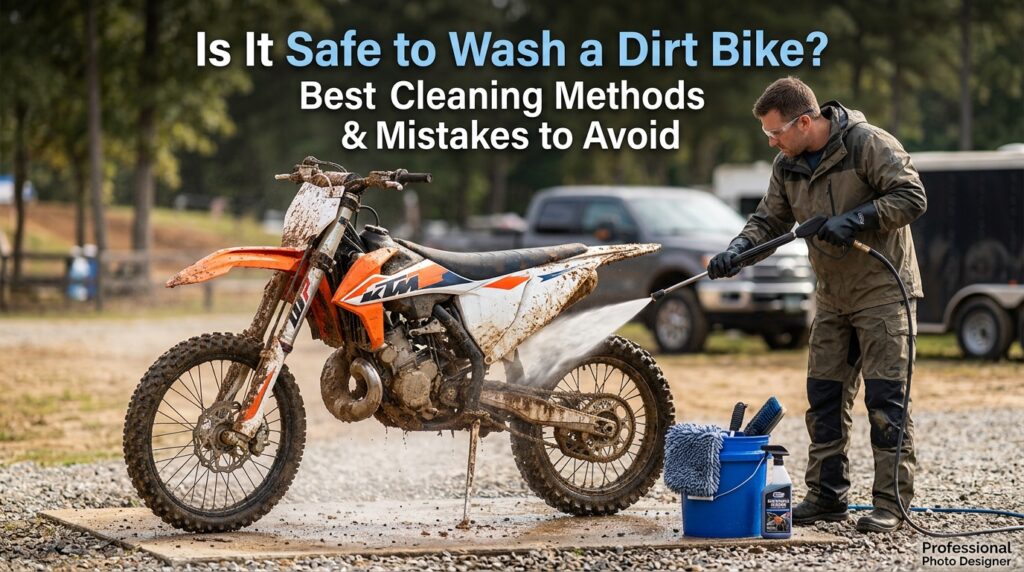
Keeping a dirt bike clean is about more than appearance. Mud, dust, sand, and grime can collect around the chain, suspension, brakes, radiators, plastics, and engine components, making regular cleaning an important part of basic maintenance.
This guide to Is It Safe to Wash a Dirt Bike? Best Cleaning Methods & Mistakes to Avoid explains how to clean a motorcycle safely, which areas need extra care, and what mistakes riders should avoid. Whether you ride a KTM, Yamaha, Honda CRF, Kawasaki KX, or Suzuki RMZ, the right cleaning routine can help protect both performance and appearance.
Yes, washing a dirt bike is generally safe when it is done correctly.
The real issue is not whether the bike gets wet. The biggest problems usually come from forcing water into sensitive areas, using excessive pressure, or failing to dry and lubricate the bike afterward.
That is the key lesson behind Is It Safe to Wash a Dirt Bike? Best Cleaning Methods & Mistakes to Avoid.
Motocross bikes are designed to operate in mud, rain, dust, and harsh riding conditions, but they still contain bearings, electrical connections, air-intake components, seals, and other parts that deserve careful treatment during cleaning.
One of the first mistakes beginners make is washing the bike immediately after riding.
A hot engine, exhaust system, and other components should be allowed to cool before you begin.
Suddenly applying cold water to extremely hot components is unnecessary and can create avoidable thermal stress.
When following Is It Safe to Wash a Dirt Bike? Best Cleaning Methods & Mistakes to Avoid, wait until the motorcycle is cool enough to handle comfortably.
This also makes the cleaning process safer for you.
If the motorcycle is covered in thick mud, avoid aggressively rubbing dry dirt across the plastics.
That can create scratches and may also damage dirt bike graphics.
Instead, loosen heavy mud gently with low-pressure water. Let stubborn dirt soften before removing it.
For bikes used regularly in motocross racing, this step can save time because mud often collects beneath fenders, around the swingarm, near footpegs, and around the engine.
Cleaning from the top downward allows dirt and cleaner to flow toward already-dirty areas.
Start around the handlebars, tank and shrouds, then move toward the frame, engine, wheels, and lower chassis.
This is a simple but effective part of Is It Safe to Wash a Dirt Bike? Best Cleaning Methods & Mistakes to Avoid.
Pressure washers are popular because they remove mud quickly, but they can also cause problems when used carelessly.
Avoid directing high-pressure water closely at wheel bearings, steering-head bearings, suspension seals, electrical connectors, chain seals, airbox openings, or other sensitive areas.
Strong water pressure can push moisture and debris where you do not want it.
The best approach in Is It Safe to Wash a Dirt Bike? Best Cleaning Methods & Mistakes to Avoid is to use pressure strategically rather than treating every part of the motorcycle the same way.
Keep the nozzle farther away around sensitive components and use gentler water pressure whenever possible.
Before washing, make sure water cannot easily enter the air intake.
Many riders use an appropriate airbox wash cover when cleaning the motorcycle with the filter removed.
The exhaust opening should also be treated carefully.
Avoid spraying water directly into the exhaust, and use a suitable exhaust plug if your cleaning routine calls for one.
Water entering places where it does not belong can create unnecessary maintenance problems.
This makes intake and exhaust protection one of the most important points in Is It Safe to Wash a Dirt Bike? Best Cleaning Methods & Mistakes to Avoid.
Not every household cleaner belongs on a dirt bike.
Harsh chemicals may discolor plastics, affect aluminum surfaces, weaken finishes, or interfere with adhesives used on vinyl decal kits.
Use cleaning products intended for motorcycles or compatible automotive surfaces, and follow the product directions.
For KTM, Yamaha, Honda CRF, Kawasaki KX, and Suzuki RMZ owners with custom graphics, mild cleaning methods are especially useful for keeping printed surfaces looking fresh.
Avoid aggressive solvents near decals and graphics unless the graphics manufacturer specifically recommends them.
Custom graphics deserve a little extra attention.
Do not hold a pressure washer nozzle extremely close to the edges of the decals. High-pressure water aimed directly at an edge may encourage lifting over time.
Instead, rinse the graphics gently and wipe them with a soft microfiber cloth or sponge.
This advice is especially important for premium dirt bike graphics and custom vinyl decal kits.
The central idea behind Is It Safe to Wash a Dirt Bike? Best Cleaning Methods & Mistakes to Avoid is to remove dirt without attacking the adhesive, laminate, or printed surface.
Also avoid abrasive brushes on graphics because repeated scratching can dull their appearance.
The chain needs cleaning, but it also needs lubrication afterward.
Remove loose dirt using an appropriate chain-cleaning method and a suitable brush.
Avoid overly aggressive solvents unless they are compatible with your specific chain type.
After washing and drying the motorcycle, apply chain lubricant according to the product instructions.
This step matters because water and cleaner can remove some of the lubrication the chain needs.
For riders involved in motocross racing, regular chain inspection is also a good opportunity to check tension, sprocket condition, and unusual wear.
Radiator fins can trap mud, grass, and debris.
Restricted airflow may reduce cooling performance, so keeping this area clean is important.
However, radiator fins are also relatively delicate.
Do not blast them at close range with excessive pressure or scrub them aggressively.
Use controlled water flow and carefully remove packed debris.
This is another practical lesson from Is It Safe to Wash a Dirt Bike? Best Cleaning Methods & Mistakes to Avoid.
Washing is only half of the process.
After rinsing, remove excess water with clean towels, compressed air used carefully, or another suitable drying method.
Pay attention to areas where water can collect around bolts, controls, the chain, electrical areas, and recessed sections of the frame.
Once the motorcycle is dry, inspect and lubricate appropriate components such as the chain and pivot points according to your maintenance routine.
This final step helps make Is It Safe to Wash a Dirt Bike? Best Cleaning Methods & Mistakes to Avoid a complete maintenance process rather than simply a cosmetic wash.
Avoid blasting bearings, electrical connectors, seals, intake areas, and decal edges from close range.
Strong degreasers and solvents may damage finishes, graphics, adhesives, or certain components.
Leaving water sitting in recessed areas can encourage corrosion and other problems.
Cleaning may remove lubricant, so reapply an appropriate product after drying.
Use soft materials to protect dirt bike graphics and vinyl decal kits.
These mistakes are central to understanding Is It Safe to Wash a Dirt Bike? Best Cleaning Methods & Mistakes to Avoid.
The answer depends on riding conditions.
A bike covered in wet mud after a motocross racing session should usually be cleaned sooner than one that was lightly ridden in dry conditions.
You do not necessarily need a deep-detail wash after every short ride, but heavy dirt should not be allowed to build up around moving parts or cooling areas.
Regular cleaning also makes inspections easier because cracks, leaks, loose bolts, worn components, and damaged graphics are easier to notice on a clean motorcycle.
If you have invested in custom graphics, cleaning technique becomes even more important.
A KTM, Yamaha, Honda CRF, Kawasaki KX, or Suzuki RMZ with personalized decals can maintain its appearance longer when riders avoid harsh chemicals and concentrated pressure at graphic edges.
If you are planning a fresh graphics package, explore Is It Safe to Wash a Dirt Bike? Best Cleaning Methods & Mistakes to Avoid and create a design built around your motorcycle and riding style.
Proper maintenance after installation can help keep the finished bike looking cleaner and more professional.
So, Is It Safe to Wash a Dirt Bike? Best Cleaning Methods & Mistakes to Avoid?
Yes, washing a dirt bike is safe and important when you use sensible methods.
Let the bike cool, remove heavy mud gently, avoid excessive pressure around sensitive components, protect intake and exhaust areas, use motorcycle-safe cleaners, dry the bike thoroughly, and lubricate the chain afterward.
The same care also helps protect custom dirt bike graphics and vinyl decal kits on KTM, Yamaha, Honda CRF, Kawasaki KX, and Suzuki RMZ motorcycles.
A good washing routine does more than make your bike look better. It makes routine inspections easier and helps you notice maintenance issues before the next motocross racing session.
Ready to refresh your bike with personalized graphics after getting it clean? Contact Boondocks Decals to discuss custom colors, rider numbers, logos, names, and graphics ideas.
Yes, but use the pressure washer carefully. Avoid spraying bearings, seals, electrical connections, the air intake, exhaust opening, chain components, and decal edges at close range.
Improper washing can damage graphics, especially if high-pressure water is aimed directly at decal edges or abrasive brushes are used. Gentle rinsing and soft cleaning materials are safer.
Not always. Washing frequency depends on conditions. Heavy mud, sand, and debris should be removed promptly, while a lightly dusty bike may only need a simpler cleaning.
Use a motorcycle-safe cleaner that is compatible with plastics, metal finishes, and graphics. Avoid harsh household chemicals unless the manufacturer specifically says they are suitable.
Yes, after the motorcycle is clean and dry, inspect the chain and apply a suitable chain lubricant according to the product instructions.
Wash them gently, avoid abrasive brushes and harsh solvents, keep strong pressure away from decal edges, and dry the motorcycle after cleaning. Proper installation and regular care can help maintain the appearance of custom graphics.
Get in touch today for fast support and professional motocross graphics assistance.